When Beautiful Floors Disappoint: Closing the Gap Between Design Intent and Real-World Performance

There is a particular frustration that follows a flooring project that looked perfect on the specification sheet but fails to deliver once the space is occupied. The colors are correct. The installation is clean. The product was premium-grade. And yet something is unmistakably wrong—a chill underfoot in winter, a persistent dampness near the perimeter, a surface that scuffs and dulls far sooner than anticipated. This is what industry professionals sometimes call the flooring mirage: the disconnect between how a product presents in a controlled environment and how it actually performs under the pressures of real-world use.
For facility managers and contractors across the United States, this phenomenon is more common than the industry openly acknowledges. Understanding its root causes—and knowing how to avoid them during the specification process—can mean the difference between a space that functions beautifully for decades and one that requires costly remediation within a few years of opening.
The Moisture Problem Nobody Talks About Early Enough
Moisture is the single most underestimated variable in commercial flooring performance. It does not announce itself during a showroom visit or a product demo. It reveals itself gradually—through adhesive failure, surface bubbling, grout discoloration, and that persistent feeling of dampness that no amount of cleaning seems to resolve.
Concrete subfloors, which underlie the majority of commercial installations in the U.S., are inherently porous and retain moisture long after a building appears dry. Relative humidity levels within a slab can shift dramatically with seasonal changes, HVAC adjustments, or even changes in building occupancy patterns. Flooring products that perform flawlessly in laboratory moisture tests may still encounter conditions in the field that exceed those controlled parameters.
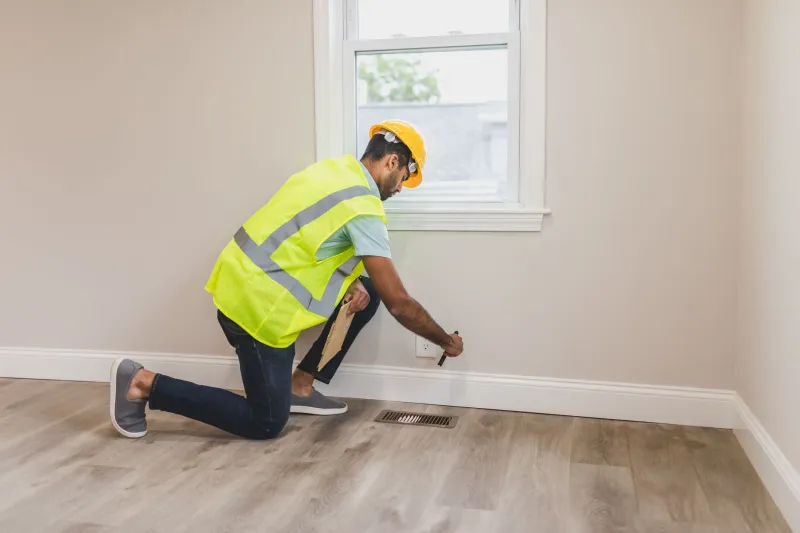
The solution is not necessarily to avoid certain product categories—it is to conduct thorough moisture testing before any material is selected, not after. Calcium chloride tests and in-situ relative humidity probes should be standard practice, not optional steps. When those results inform material selection rather than being treated as a formality after the fact, the incidence of post-installation moisture failure drops substantially.
Thermal Comfort: The Invisible Layer of the Specification
A floor's thermal properties rarely appear as a headline specification in product literature, yet they have a measurable effect on how occupants experience a space. Hard, dense materials—certain natural stones, uninsulated concrete overlays, and some ceramic tile formats—conduct heat away from the foot rapidly, creating a sensation of coldness that persists regardless of ambient air temperature. In office environments, this translates to employee discomfort during cooler months. In retail settings, it can subtly discourage customers from lingering.
Designers often select these materials for their visual weight and durability credentials, both of which may be entirely justified. The oversight occurs when thermal comfort is not factored into the specification alongside those other attributes. Resilient flooring products, luxury vinyl tile, and properly cushioned carpet systems offer meaningfully different thermal performance—and in many commercial applications, that difference is felt by every person who walks through the door.
Radiant heating systems can offset some of this effect, but they add cost and complexity to a project. In many cases, a more thoughtful material selection achieves the same comfort outcome at a fraction of the added investment.
Premium Materials and the Durability Assumption
There is a widespread assumption in commercial specification that higher price correlates directly with higher durability. This is not always accurate, and acting on that assumption without examining the specifics can lead to significant disappointment.
Wear layer thickness, surface treatment chemistry, and installation requirements all interact in ways that are not always intuitive. A luxury vinyl product with an impressive wear layer rating may still show premature wear in high-traffic corridors if the subfloor preparation was not executed to the manufacturer's specifications. A hardwood floor that performs admirably in a residential setting may buckle or gap in a commercial environment with variable humidity and heavy foot traffic.
The relevant question is not simply "what is the wear rating?" but rather "under what specific conditions was that rating established, and do those conditions match our application?" Contractors and facility managers who build this line of inquiry into their standard specification process consistently report fewer post-installation surprises.
Acoustic Performance as a Functional Indicator
Floors that feel wrong are not always wrong in the ways that are immediately visible. Acoustic performance—specifically, the way a floor transmits impact sound to spaces below—is a functional dimension that occupants register viscerally, even when they cannot identify its source. A space that sounds hollow or loud underfoot creates an ambient stress that affects concentration and perceived quality.
High-impact commercial environments, multi-story office buildings, and hospitality spaces are particularly susceptible to this effect. Products with integrated acoustic underlayment or inherently sound-absorbing surface materials address this concern at the specification stage rather than requiring costly remediation after complaints arise.
Aligning Specification to Reality
The most effective safeguard against post-installation disappointment is a specification process that treats performance variables—moisture, thermal comfort, acoustic behavior, and durability under actual use conditions—as equally important to visual design. This requires a different kind of conversation between designers, contractors, and facility managers: one that begins with a frank assessment of the environment rather than a materials catalog.
Site conditions, occupancy patterns, maintenance protocols, and long-term budget expectations should all inform material selection before aesthetic preferences enter the discussion. This does not diminish the importance of design—it ensures that the design chosen will actually deliver the experience it promises.
At Tarkett USA, the conversation we have with contractors and facility managers begins with the space itself: its demands, its challenges, and its long-term role in the organization it serves. That foundation is what separates a floor that merely looks right from one that genuinely performs.