Old Buildings, New Edge: How Contemporary Flooring Technology Is Helping Legacy Properties Compete
There is a persistent narrative in commercial real estate that newer is always better—that a Class A tower completed in the last five years will inevitably outperform a 1970s office park in tenant appeal, rental rates, and long-term asset value. This narrative is being quietly disrupted by a growing cohort of property owners and managers who have discovered that strategic, targeted investment in flooring technology can narrow that competitive gap considerably—and in some cases, eliminate it.
The retrofit opportunity is significant. The United States has an enormous stock of commercial buildings constructed between 1950 and 1990 that remain structurally sound but aesthetically and functionally dated. For owners of these properties, the choice has historically felt binary: undertake a costly, disruptive full renovation or accept a discount on rents relative to newer inventory. Modern flooring solutions are introducing a third option that is faster, less expensive, and more strategically targeted than either of those alternatives.
The Competitive Landscape for Aging Commercial Properties
Tenants evaluating commercial space in any major U.S. market today bring expectations shaped by the best new construction they have toured. They expect spaces that feel clean, contemporary, and functional—environments that support the kind of workplace experience they are trying to create for their own employees. When an older building fails to deliver that baseline experience, it loses deals regardless of its location advantages, price point, or structural quality.
The floor is often the single most visible element of that first impression. Stained carpet from the 1990s, cracked vinyl composition tile, or worn concrete that reads as neglect rather than industrial character—these are the details that cause prospective tenants to mentally downgrade a space within the first thirty seconds of a tour. Conversely, updated flooring that signals quality and intentionality can reframe a tenant's perception of the entire building.
This dynamic is well understood by experienced commercial real estate brokers, who frequently cite flooring as one of the highest-return cosmetic investments a property owner can make before bringing a vacancy to market.
Quick-Install Systems and the Disruption Advantage
One of the most significant developments in commercial flooring over the past decade is the proliferation of quick-install and loose-lay systems that do not require the removal of existing substrates or the use of permanent adhesives. For owners of occupied commercial buildings, this is transformative.
Traditional flooring replacement in a multi-tenant office building required vacating spaces, managing adhesive cure times, and coordinating around business operations in ways that were expensive and logistically complex. Modern click-lock luxury vinyl plank systems, floating carpet tile installations, and peel-and-stick resilient products can often be installed over existing substrates—provided those substrates are properly prepared—with dramatically reduced downtime.
A property management company overseeing a 1960s-era office complex in the mid-Atlantic region recently completed a phased flooring upgrade across 80,000 square feet using a combination of loose-lay luxury vinyl tile in common areas and modular carpet systems in tenant suites. The project was executed floor by floor over a six-month period without displacing a single tenant. The result was a measurable increase in renewal rates and the ability to list vacant units at rates competitive with newer inventory in the same submarket.
Warehouse-to-Office Conversions and the Flooring Challenge
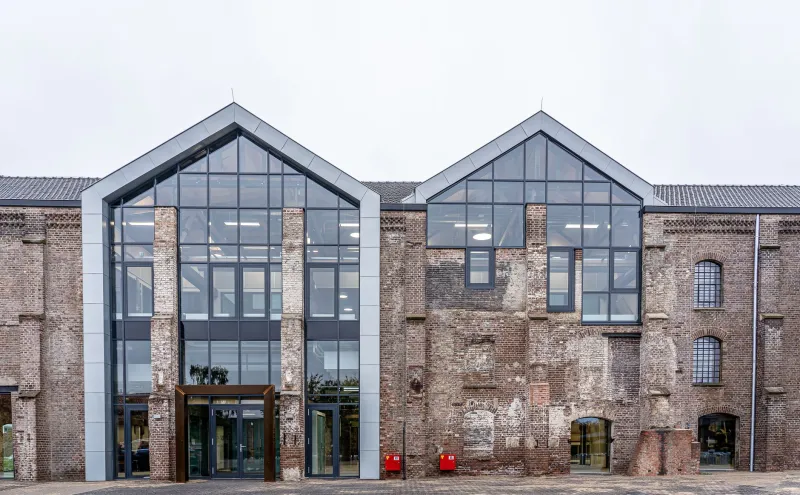
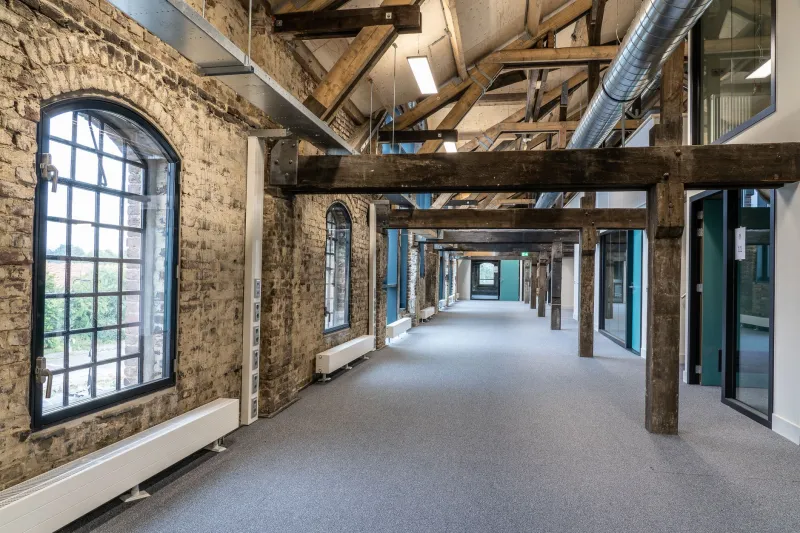
The adaptive reuse trend—converting former industrial and warehouse properties into creative office space, mixed-use developments, and lifestyle retail—has created a specific set of flooring challenges that modern products are well-positioned to address.
Warehouse floors are typically large-format concrete slabs with surface irregularities, control joint patterns, and prior coatings that complicate direct installation of finished flooring. Historically, bringing these surfaces to a condition suitable for premium flooring required extensive grinding, patching, and leveling work that added cost and time to every conversion project.
Contemporary self-leveling underlayment products, combined with resilient flooring systems engineered to tolerate minor substrate imperfections, have significantly reduced the preparation burden. Polished concrete overlays with embedded color and texture offer another pathway—one that leans into the industrial aesthetic that characterizes successful warehouse conversions rather than fighting it. These solutions allow developers to achieve a high-design result on a substrate that would previously have required far more invasive preparation.
A converted 1940s warehouse in a secondary Midwestern market recently completed a tenant improvement package using a combination of polished concrete in open collaborative zones and modular carpet tile in enclosed office areas. The project was delivered on schedule and under budget relative to comparable new construction, and the building is now fully leased at rates the ownership group had not previously achieved on any of their properties.
Sustainability Credentials and Tenant Expectations
Modern tenants—particularly those with corporate sustainability commitments—increasingly require documentation of the environmental credentials of the spaces they occupy. This includes flooring. Products that carry recognized certifications for recycled content, low chemical emissions, and responsible manufacturing are no longer a differentiator; in many markets, they are a baseline expectation.
For owners of older buildings, this presents both a challenge and an opportunity. A legacy property with no sustainability story is at a disadvantage in conversations with environmentally committed tenants. But a targeted flooring replacement using certified, sustainable products immediately creates a credible environmental narrative that can be documented in tenant improvement agreements and marketing materials. The investment in sustainable flooring does double duty: it improves the physical environment and generates the third-party verified credentials that sophisticated tenants require.
The Math of Strategic Retrofit
The return-on-investment case for flooring-led retrofits in older commercial buildings is compelling when analyzed across the full value chain. Rental rate premiums of five to fifteen percent are commonly reported by property managers who have executed well-targeted flooring upgrades in previously discounted inventory. Tenant retention improvements—measured in reduced vacancy costs and turnover expenses—add further value that does not always appear in simple per-square-foot renovation cost analyses.
Perhaps most importantly, flooring upgrades can be executed in stages that align with existing lease expirations, allowing property owners to manage capital deployment efficiently rather than committing to large upfront expenditures. This phased approach transforms what might otherwise feel like an overwhelming capital project into a manageable, ongoing asset improvement program.
At Tarkett USA, we work with property owners, contractors, and facility managers who are navigating exactly this challenge. The tools available today—quick-install systems, sustainable certified products, and materials engineered to perform on imperfect substrates—make the retrofit opportunity more accessible than it has ever been. The buildings that seize it are discovering that age, properly addressed, can become a selling point rather than a liability.