Timeless vs. Trendy: How to Identify Flooring Designs Built to Last
Every few years, a flooring aesthetic arrives with considerable fanfare — featured prominently in shelter magazines, showcased at NeoCon in Chicago, and adopted with enthusiasm by early-moving designers and developers. And then, sometimes almost imperceptibly, it begins to recede. The chevron hardwood pattern that seemed fresh in 2017 starts to feel dated by 2022. The ultra-gray LVT that dominated commercial interiors for a decade begins to look tired against the warmer palettes now entering the market.
For consumers renovating a home they plan to own for 15 years, and for workplace designers specifying flooring for corporate environments with decade-long lease commitments, the distinction between a lasting design direction and a fleeting aesthetic moment is not a matter of personal taste — it is a financial and functional imperative.
So how do you tell the difference?
The Anatomy of a Lasting Trend
Design professionals who work across residential and commercial sectors consistently point to three characteristics that distinguish durable aesthetics from those destined for the design graveyard: versatility, material honesty, and cultural resonance.
Versatility refers to how well a flooring design integrates across a range of furnishing styles, color palettes, and spatial contexts. A floor that works beautifully only in a highly specific aesthetic moment — say, the maximalist, jewel-toned interiors popular in certain editorial circles around 2020 — has limited staying power because it cannot adapt as adjacent design elements evolve. By contrast, a warm-toned wood-look LVT in a medium-width plank format has demonstrated its ability to anchor interiors ranging from Scandinavian-influenced minimalism to transitional American residential design. Its versatility is the source of its longevity.
Material honesty describes the degree to which a flooring product's visual character aligns with its physical properties and the broader cultural values of its moment. Consumers and designers in the United States are increasingly drawn to materials — or convincing representations of materials — that feel authentic and grounded. This is why the natural stone-look category has sustained momentum across multiple design cycles: it speaks to a desire for permanence and craft that transcends any single trend season.
Cultural resonance is perhaps the most difficult quality to quantify, but it is often the most predictive. Flooring aesthetics that align with broader social and cultural shifts — toward wellness, sustainability, connection to the natural world — tend to endure because they are expressions of values rather than stylistic novelty. Biophilic design, for instance, is not merely an aesthetic direction; it reflects a documented human psychological need for connection to natural environments. Flooring products that embody this orientation — whether through organic color palettes, texture variation, or sustainable material credentials — are not riding a trend so much as responding to a fundamental human constant.
What the Current Market Tells Us
Several directions currently active in the flooring market demonstrate these characteristics with enough clarity to warrant confidence as long-term investments.
Warm neutrals with variation. The decade-long dominance of cool, uniform gray tones in both commercial and residential flooring is giving way to warmer beiges, taupes, and natural browns — but with an important distinction from earlier warm-tone cycles. Today's warm-neutral flooring products incorporate deliberate variation in tone and texture, mimicking the natural irregularity of hardwood or stone rather than presenting a uniform, manufactured appearance. This direction has staying power because it satisfies both the aesthetic preference for warmth and the cultural preference for authenticity.
Large-format tile and plank. The shift toward larger formats — both in hard-surface tile and in LVT plank widths — reflects an underlying spatial logic that transcends trend cycles. Fewer grout lines in tile create a cleaner, more expansive visual field. Wider planks in wood-look products reduce the visual busyness of narrow-strip formats. These are functional and compositional advantages that do not expire with a design season.
Textured surfaces. Wire-brushed wood finishes, embossed-in-register LVT, and matte-finished tile have collectively displaced the high-gloss surfaces that dominated earlier periods. Beyond aesthetics, these finishes offer practical advantages — they conceal everyday wear and are easier to maintain in commercial environments. A design direction that aligns with functional performance is inherently more durable than one that is purely cosmetic.
What Is Almost Certainly a Fad
With equal candor, several current trends show the hallmarks of limited longevity.
Highly saturated statement floors. Deep emerald, cobalt, and terracotta floor tiles have generated significant editorial coverage and social media engagement. They are visually arresting in styled photography. In a lived or worked environment, however, they impose severe constraints on every subsequent design decision — furniture, wall color, lighting — and they age poorly as surrounding elements change. They are also highly specific to a cultural moment defined by maximalist reaction against the minimalism of the previous decade. As that reaction matures, these floors will feel dated quickly.
Hyper-realistic novelty prints. Advances in digital printing technology have made it possible to produce flooring that mimics virtually any surface — including materials with no historical precedent in flooring applications. While technically impressive, products whose appeal rests primarily on novelty rather than functional or aesthetic merit have a predictably short cycle. The novelty exhausts itself.
Advice from the Field
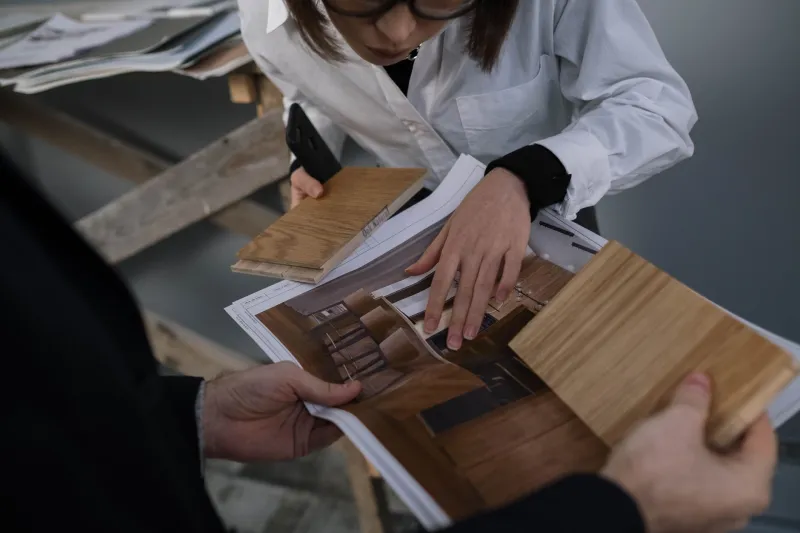
Design professionals who advise on long-horizon projects — healthcare facilities, higher education campuses, corporate headquarters — tend to apply a simple test to any flooring selection under consideration: Would this floor have looked reasonable ten years ago, and can I imagine it looking reasonable ten years from now? Products that pass this test on both ends of the timeline tend to be grounded in the enduring characteristics described above.
Tarkett's own trend research, which draws on data from markets across North America and Europe, consistently identifies a pattern in which innovations that gain traction in commercial environments — where durability and long-term aesthetic performance are non-negotiable — subsequently migrate into residential design. This pipeline is a useful signal for consumers: if a flooring direction is being specified for a corporate campus or healthcare facility with a 20-year use expectation, it has almost certainly been vetted for longevity in ways that purely residential trend cycles do not require.
Making the Confident Choice
The goal is not to avoid all contemporary design influence — a floor that ignores the visual language of its moment can feel anachronistic and unwelcoming. The goal is to select products whose contemporary character is expressed through enduring qualities: material authenticity, tonal warmth, textural richness, and compositional clarity.
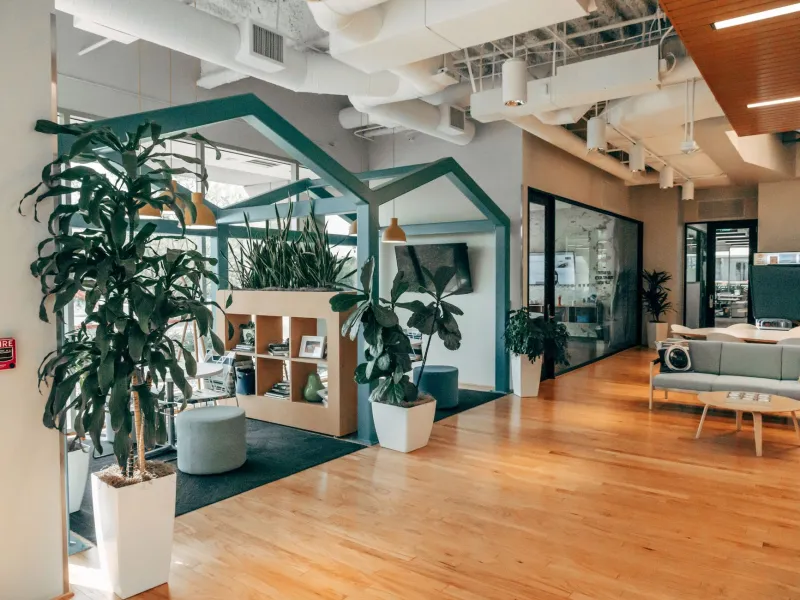
For workplace environments in particular, flooring decisions carry an additional layer of significance. The floor anchors the visual and sensory experience of every person who enters the space. Selections that age gracefully support employee wellbeing and organizational identity across the full arc of a lease or ownership cycle — rather than requiring premature renovation to correct a choice that looked current in year one and dated by year four.
At Tarkett, our design development process is explicitly oriented toward this kind of longevity. We invest in understanding not just what is capturing attention in the current design conversation, but what underlying human needs and environmental conditions are driving that attention — because it is those underlying forces, not the surface aesthetics, that determine whether a flooring direction will still feel right a decade from now.