Bringing the Outside In: How Biophilic Flooring Is Reshaping the Modern American Workplace
For decades, the standard commercial office floor was an afterthought—a stretch of utilitarian carpet tile chosen for price and durability, with little consideration for how it might affect the people walking across it every day. That mindset is changing rapidly. Across corporate campuses in cities like Austin, Chicago, Seattle, and New York, facility managers and design teams are embracing biophilic design principles with renewed conviction, and flooring is at the center of that transformation.
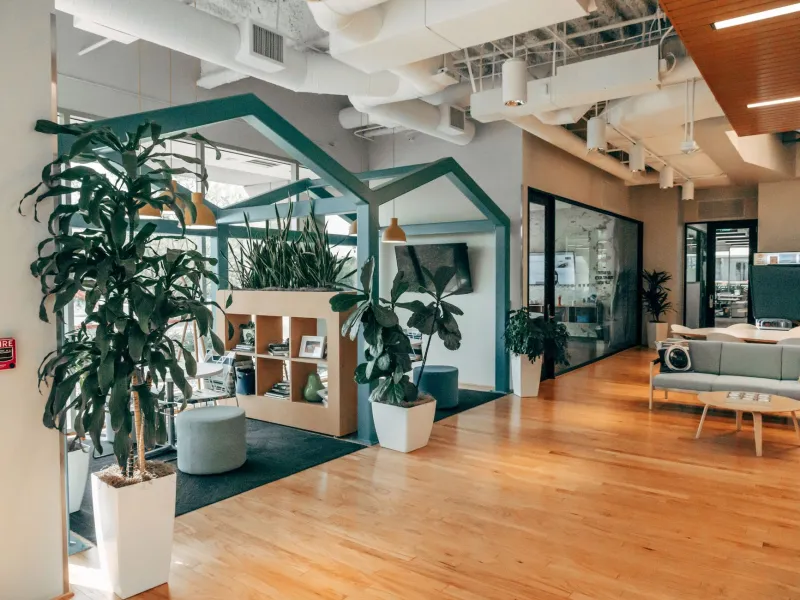
Biophilic design—the practice of integrating natural elements into built environments—has moved well beyond decorative plants and skylights. Today, it encompasses every surface in a space, including the floor. The materials underfoot, the textures employees sense as they move through a building, and the visual cues a floor provides all contribute to how connected workers feel to the natural world, even when they are several floors above street level.
What the Research Tells Us
The scientific foundation supporting biophilic design has grown considerably over the past two decades. A landmark study published by the Human Spaces initiative, which surveyed more than 7,600 office workers across 16 countries, found that employees who work in environments incorporating natural elements reported a 15 percent higher level of well-being and a 6 percent increase in productivity compared to those in spaces without such features.
Additional research from the University of Exeter reinforced these findings, demonstrating that enriched office environments—those featuring natural materials, textures, and colors—led to measurable improvements in employee concentration and job satisfaction. When it comes to flooring specifically, materials that mimic or incorporate organic patterns reduce visual fatigue and create a psychological sense of calm that sterile, uniform surfaces simply cannot replicate.
For facility managers responsible for large commercial portfolios, these are not abstract wellness metrics. They translate directly into reduced absenteeism, lower employee turnover, and stronger recruitment outcomes—all of which carry significant financial implications.
The Flooring Materials Leading the Movement
Several flooring categories have emerged as particularly well-suited to biophilic commercial applications, each offering a distinct combination of aesthetic authenticity and practical performance.
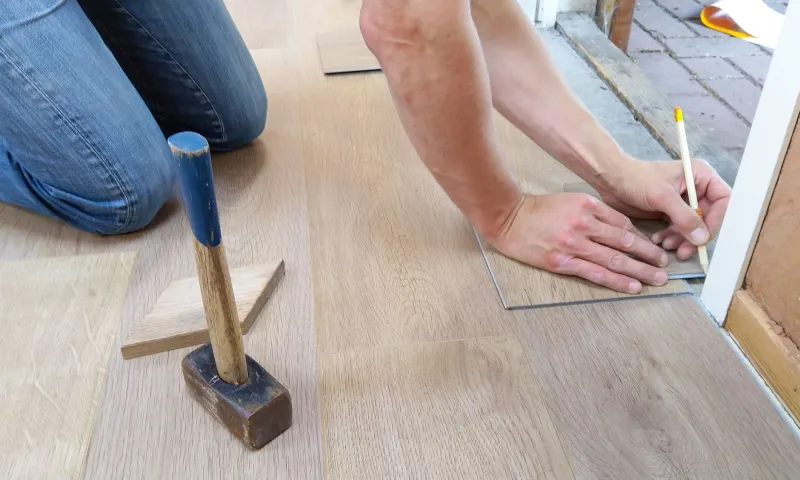
Wood-Look Luxury Vinyl Plank (LVP) Advanced manufacturing technology has made wood-look luxury vinyl plank one of the most compelling options for commercial spaces seeking warmth and visual continuity. High-definition printing and embossing techniques now produce surfaces that are remarkably difficult to distinguish from genuine hardwood at a glance, while offering the dimensional stability and moisture resistance that real wood cannot always provide in high-traffic environments. For offices in humid climates—think Atlanta or Houston—this distinction is particularly meaningful.
Cork Flooring Cork has experienced a genuine renaissance in commercial design circles. Harvested from the bark of cork oak trees without felling the tree itself, cork is one of the most inherently sustainable flooring materials available. Its cellular structure provides natural cushioning underfoot, which reduces fatigue in environments where employees stand for extended periods. Cork also possesses acoustic dampening properties, making it a practical choice for open-plan offices where noise management is a persistent challenge.
Stone and Stone-Look Options Natural stone—and its engineered counterparts—brings an enduring sense of groundedness to commercial interiors. Slate, travertine, and limestone have long been used in high-end lobbies and reception areas, but porcelain tiles engineered to replicate stone textures now make this aesthetic accessible across a broader range of budget parameters. The visual weight of stone-look flooring anchors a space and signals permanence, qualities that resonate strongly in client-facing environments.
Case Studies: American Companies Investing in Nature-Inspired Floors
Several prominent US organizations have demonstrated through real-world application that biophilic flooring delivers measurable returns.
A major technology firm headquartered in the Pacific Northwest undertook a comprehensive campus renovation several years ago that replaced conventional carpet tile throughout its primary office buildings with a combination of wood-look LVP in collaborative zones and cork in quieter focus areas. Post-occupancy surveys conducted twelve months after completion showed a statistically significant improvement in employee-reported comfort and a reduction in stress-related sick days.
In the healthcare sector, a regional hospital network in the Midwest redesigned its administrative offices using stone-look porcelain in public-facing corridors and wood-look vinyl in staff work areas. The dual approach balanced infection control requirements with the human-centered design goals the organization had established for its employee wellness initiative.
A financial services company in Midtown Manhattan, constrained by the practical demands of a busy trading floor environment, opted for cork-backed luxury vinyl tile that delivered the visual warmth of natural materials alongside the acoustic control necessary in a high-intensity workspace.
Guidance for Facility Managers: Selecting the Right Biophilic Floor
Choosing a biophilic flooring solution for a commercial environment requires balancing several competing priorities. The following considerations can help guide the decision-making process.
Traffic Volume and Wear Classification Commercial flooring products are rated according to wear layer thickness and traffic classification. High-footfall corridors, lobbies, and open-plan work areas require products rated for heavy commercial use. Specifying a product with an insufficient wear rating to achieve a lower upfront cost is a common error that leads to premature replacement and elevated lifecycle costs.
Indoor Air Quality Credentials Biophilic design is fundamentally connected to occupant health, which means the materials selected should not introduce harmful compounds into the indoor environment. Look for products that carry FloorScore or GREENGUARD Gold certification, both of which indicate low volatile organic compound (VOC) emissions verified by independent testing.
Maintenance Compatibility Even the most beautiful biophilic floor will underperform if the maintenance protocol required to sustain it is incompatible with the facility's operational capacity. Cork, for example, requires periodic resealing in commercial settings. Wood-look LVP, by contrast, is generally low-maintenance and compatible with standard commercial cleaning equipment. Matching the product to the maintenance infrastructure available is as important as matching it to the design intent.
Acoustic Performance Open-plan offices continue to dominate American commercial real estate, and noise remains one of the most frequently cited sources of employee dissatisfaction in these environments. Flooring products with integrated acoustic underlayment or inherently sound-absorbing compositions—cork being the prime example—can meaningfully reduce ambient noise levels and improve speech privacy.
The Floor as a Wellness Investment
The conversation around workplace wellness has matured considerably since the early days of standing desks and ergonomic chairs. Today's most progressive organizations understand that the built environment itself is a health and performance variable, and that every surface—including the floor—contributes to the overall quality of the space.
At Tarkett USA, we work with facility managers, architects, and design professionals to identify flooring solutions that align with both the aesthetic ambitions and the operational realities of commercial projects. Whether the goal is to create a restorative focus environment, a dynamic collaborative hub, or a client-facing space that communicates values of sustainability and care, nature-inspired flooring offers a compelling foundation.
The research is clear, the market is moving, and the materials are ready. The question for today's facility managers is not whether biophilic flooring belongs in their next project—it is how to select the right expression of it for the specific needs of their space.