Floor It Right: A Contractor's Tactical Guide to Flooring Choices That Maximize Rehab Returns
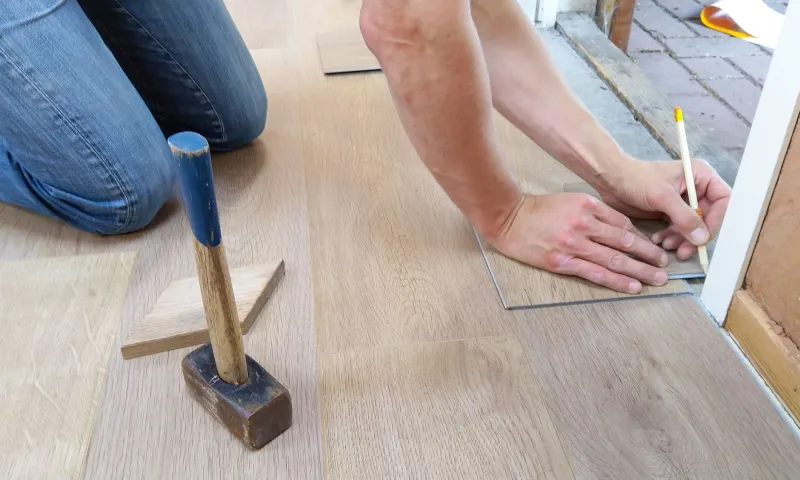
Walk through any house flip that has sat on the market longer than expected, and there is a reasonable chance the floors have something to do with it. Buyers notice flooring immediately—before they register the kitchen appliances, before they assess the bathroom fixtures, and often before they consciously process anything else about the property. For contractors managing residential rehabs, that reality is both a risk and an opportunity.
Strategic flooring selection is one of the highest-leverage decisions in a rehab budget. Done well, it compresses time on market, supports a stronger list price, and reduces the likelihood of buyer negotiation around condition issues. Done poorly, it signals to buyers—and their agents—that the renovation was surface-level rather than thoughtful. This guide is designed to help contractors make informed, market-aware flooring decisions that protect margin and accelerate outcomes.
Understanding Cost Per Square Foot Across Material Categories
Before selecting any flooring product, contractors need a clear-eyed view of the true cost equation. The sticker price per square foot is only the beginning. Material cost must be evaluated alongside installation labor, subfloor preparation requirements, waste factors, and expected lifespan relative to the property's price point.
Luxury Vinyl Plank (LVP) LVP has become the dominant choice in residential rehabs across most US markets, and for good reason. Material costs typically range from $2.00 to $5.00 per square foot depending on wear layer thickness and product quality, with installation adding approximately $1.50 to $3.00 per square foot. Its click-lock installation system reduces labor hours significantly compared to glue-down or nail-down alternatives, and its tolerance for minor subfloor imperfections limits the prep work required before installation begins. For a mid-tier rehab targeting first-time buyers or rental investors, LVP represents the most efficient balance of cost, appearance, and durability available in the current market.
Laminate Flooring Laminate remains a viable option at the entry-level price point, with material costs often falling between $1.00 and $3.50 per square foot. However, its susceptibility to moisture damage—particularly in kitchens, bathrooms, and below-grade spaces—limits its appropriate application zones. Contractors who use laminate in moisture-prone areas frequently encounter warranty issues and buyer inspection findings that complicate closings. Reserve laminate for dry living areas in properties where budget constraints are genuinely binding.
Hardwood (Solid and Engineered) In higher-end rehab projects—those targeting the $400,000-and-above price range in most major metro markets—hardwood flooring remains a powerful value driver. Engineered hardwood, which offers greater dimensional stability than solid wood while retaining the authentic surface appearance buyers at this price point expect, typically runs $4.00 to $8.00 per square foot for materials, with installation costs of $3.00 to $5.00 per square foot. The premium is real, but so is the return in markets where buyers are comparing finished properties and hardwood is the expectation rather than the exception.
Carpet Carpet's role in residential rehabs has narrowed considerably over the past decade as buyer preferences have shifted decisively toward hard surface flooring. That said, bedrooms remain a legitimate application for carpet in many markets, particularly in the Midwest and Southeast, where buyers associate bedroom carpet with comfort rather than outdated style. Budget approximately $2.00 to $4.00 per square foot installed for a mid-grade residential carpet that photographs well and holds up through the inspection and closing process.
Installation Practices That Protect Your Margin
Material selection is only half the equation. How flooring is installed determines both the quality of the finished product and the efficiency of the labor investment. Several installation disciplines consistently separate experienced rehab contractors from those who struggle with cost overruns.
Subfloor Assessment Before Ordering Material One of the most common sources of budget blowout in flooring installations is discovering subfloor problems after materials have already been delivered to the site. Walk every room with a level before finalizing your material order. Identify high spots, low spots, soft areas, and moisture intrusion points. Factor subfloor remediation costs into your budget before you pull the trigger on product selection, not after.
Accurate Waste Factor Calculation A standard 10 percent waste factor is appropriate for straight-lay installations in rectangular rooms. Diagonal installations, herringbone patterns, or rooms with significant angles and offsets require a waste factor of 15 to 20 percent. Underordering and requiring a second delivery—particularly for products where dye lot matching matters—adds cost and delays project completion. Overordering by a reasonable margin is almost always the more economical choice.
Acclimation Requirements Wood-based products, including engineered hardwood and some laminate options, require acclimation time in the installation environment before they are laid. Skipping this step to accelerate the schedule is a false economy that frequently results in gapping, buckling, or cupping after installation—defects that buyers, inspectors, and their agents will identify and use as negotiation leverage.
Reading Regional Market Preferences
US housing markets are not monolithic, and flooring preferences vary meaningfully by geography. Contractors who apply a single product strategy across different regional markets leave value on the table.
In the Sun Belt—Texas, Florida, Arizona, Georgia—buyers have strong preferences for hard surface flooring throughout the home, driven partly by climate considerations and partly by the aesthetic norms that have developed in high-growth housing markets. LVP with a warm wood tone performs exceptionally well in these markets, and carpet is often viewed skeptically outside of bedrooms.
In the Midwest, buyers tend to be more value-conscious and respond well to clean, practical flooring choices. High-quality LVP in neutral tones hits the sweet spot between perceived value and budget efficiency. Hardwood is appreciated in higher-end properties but is not necessarily expected at mid-market price points.
In the Northeast—particularly in older housing stock across cities like Boston, Philadelphia, and the New York metro area—original hardwood floors are a selling point that buyers actively seek. When existing hardwood is present, refinishing rather than replacing it almost always delivers a better return than covering it with new material. When replacement is necessary, engineered hardwood that matches the character of the neighborhood's architectural vernacular will outperform LVP in buyer perception at the upper end of the market.
On the West Coast, sustainability credentials are increasingly influential in buyer decision-making. Products with recognized environmental certifications—FloorScore, GREENGUARD, or recycled content documentation—can support a stronger price position in markets like Seattle, Portland, and the San Francisco Bay Area, where environmentally conscious buyers are a significant portion of the purchasing pool.
Before and After: What Strategic Flooring Choices Actually Deliver
The numbers behind flooring ROI in residential rehabs are compelling when the right decisions are made. Consider a representative example from the Dallas market: a three-bedroom, two-bath property acquired for $210,000 in need of full interior renovation. The original flooring throughout was worn carpet and cracked vinyl tile. Replacing all 1,400 square feet of flooring with mid-grade LVP—at a total installed cost of approximately $7,000—contributed to a final sale price of $285,000 against a comparable unrenovated property in the same neighborhood that sold for $248,000. The flooring investment was one component of a broader renovation, but it was among the highest-visibility changes that buyer feedback consistently credited.
A contrasting example from the Chicago market illustrates the premium segment: a vintage two-flat in Lincoln Square where the existing hardwood floors were in poor condition. Rather than covering them, the contractor invested $4,800 in professional refinishing. The property sold above asking price, with multiple buyers specifically citing the restored original floors in their offer letters.
Selecting a Flooring Partner Who Understands the Rehab Business
For contractors managing multiple simultaneous projects, product consistency, reliable availability, and responsive technical support are not optional—they are operational requirements. Working with a manufacturer that maintains consistent product lines, offers contractor pricing structures, and provides installation documentation that supports warranty claims simplifies every project and reduces the risk of mid-job surprises.
At Tarkett USA, we work directly with contractors, remodelers, and property investors to provide flooring solutions that align with the practical demands of residential rehab work. From product selection guidance to installation resources, our goal is to help you make flooring decisions that protect your margins, satisfy your buyers, and keep your projects moving on schedule.