When the Floor Becomes a Safety Net: Reducing Workplace Injuries Through Smarter Flooring Decisions
The Hidden Cost Center Hiding in Plain Sight
Every year, the Bureau of Labor Statistics documents hundreds of thousands of workplace injuries attributable to slips, trips, and falls — a category that consistently ranks among the leading causes of occupational harm across virtually every industry sector. According to the National Safety Council, these incidents cost U.S. employers an estimated $70 billion annually when factoring in medical expenses, lost productivity, legal liability, and workers' compensation claims. That figure does not account for the less quantifiable toll: employee morale, talent retention, and the reputational consequences of a workplace perceived as unsafe.
What rarely surfaces in boardroom conversations about safety investment is the degree to which flooring — the surface every employee, customer, and visitor contacts multiple times daily — directly influences those outcomes. For facility managers, operations directors, and contractors responsible for commercial buildouts, the flooring specification decision is not merely aesthetic. It is, in measurable terms, a safety decision with direct financial implications.
Slip Resistance: The First Line of Defense
OSHA's General Industry standards (29 CFR 1910.22) require that walking and working surfaces be maintained in a clean, dry, and sanitary condition, and that floors capable of accumulating moisture be equipped with drainage and non-slip surfaces. However, compliance with the letter of these regulations and genuine slip-resistance performance are not always synonymous.
The coefficient of friction (COF) is the standard metric used to assess a floor's slip resistance. The Americans with Disabilities Act recommends a minimum static COF of 0.6 for level surfaces and 0.8 for ramps. But in environments where water, grease, or cleaning chemicals are routinely present — commercial kitchens, hospital corridors, retail entrances — specifying a floor that merely meets the minimum threshold may be insufficient.
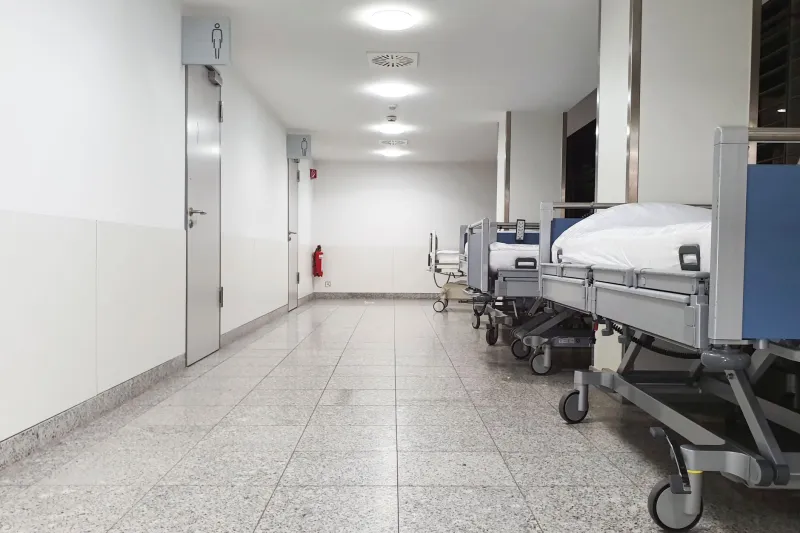
In food service environments specifically, the National Floor Safety Institute reports that slipping and falling accounts for more than 57 percent of all restaurant worker injuries. Selecting flooring with enhanced wet-area COF ratings, textured surfaces, or specialized anti-fatigue properties in kitchen and prep zones can meaningfully reduce incident frequency. The same principle applies in healthcare, where patient handling areas, wet utility rooms, and high-traffic corridors demand surfaces that maintain grip integrity even after repeated cleaning with hospital-grade disinfectants.
Modern luxury vinyl tile (LVT) and sheet vinyl products engineered for commercial use now routinely incorporate embossed or matte surface treatments that preserve traction across a range of conditions. For contractors specifying these products, reviewing third-party COF test data — rather than relying on manufacturer claims alone — is a critical step in responsible selection.
Ergonomics and Impact Absorption: The Injury You Don't See Coming
Slip-and-fall incidents generate immediate, visible consequences. But a separate category of workplace injury accumulates more gradually and is often harder to attribute to a specific cause: musculoskeletal disorders (MSDs) resulting from prolonged standing on hard surfaces.
The National Institute for Occupational Safety and Health (NIOSH) has extensively documented the relationship between hard flooring surfaces and lower extremity fatigue, lower back pain, and cumulative joint stress among workers who spend extended periods on their feet. Retail associates, assembly line workers, surgical teams, and food service staff are among the highest-risk populations. These conditions rarely appear in incident reports as discrete events, but they drive absenteeism, reduce output quality, and — critically — accelerate voluntary turnover in industries already struggling with labor retention.
Anti-fatigue flooring solutions, including cushioned vinyl composites and specialized underlayment systems, are specifically engineered to reduce the compressive load on joints and the muscular effort required to maintain stable posture over time. Research published in occupational health journals has demonstrated measurable reductions in lower back discomfort and leg fatigue among workers on cushioned surfaces compared to those standing on concrete or standard hard tile.
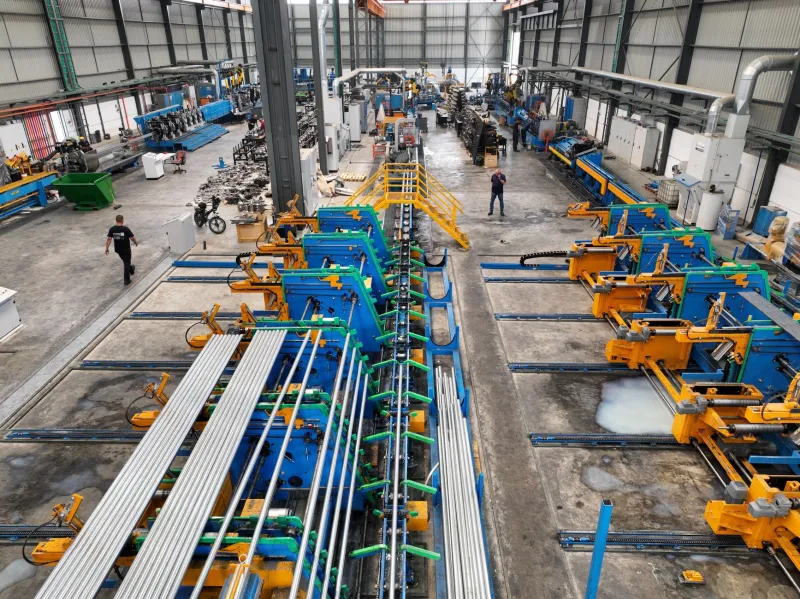
For manufacturing facilities in particular, where employees may stand in a fixed position for six to eight hours per shift, the ergonomic specification of flooring in workstations, assembly areas, and quality control zones represents a direct investment in sustained workforce productivity. The calculus is straightforward: a worker experiencing less physical fatigue in the final two hours of a shift maintains higher output quality and makes fewer errors than one whose endurance has been eroded by an unyielding surface.
The Workers' Compensation Equation
The financial case for safety-focused flooring investment becomes most legible when viewed through the lens of workers' compensation data. A single slip-and-fall injury resulting in a lost-time claim can carry direct costs of $30,000 to $50,000 or more, depending on the severity of injury, jurisdiction, and litigation exposure. When indirect costs — temporary staffing, retraining, supervisory time, and productivity disruption — are incorporated, the true cost multiplier is often estimated at three to five times the direct expense.
Contrast that with the incremental cost of specifying a higher-performance flooring product with superior slip resistance or ergonomic properties. In many commercial applications, the premium over a standard specification is measured in cents per square foot. Across a 10,000-square-foot facility, a $0.50 per square foot upgrade represents a $5,000 investment. Preventing even a single moderate workers' compensation claim more than offsets that differential — often within the first year of occupancy.
For organizations operating across multiple locations, the aggregated risk reduction can be substantial. Retailers, healthcare systems, and hospitality groups that standardize on safety-rated flooring across their portfolios frequently report measurable reductions in incident frequency rates over three-to-five-year periods following specification changes.
Environment-Specific Considerations for Contractors
Not all commercial environments carry the same risk profile, and effective flooring specification requires a nuanced assessment of each space's unique hazard conditions.
Retail and grocery environments should prioritize entrance matting systems that capture moisture and debris before it migrates onto interior hard surfaces, combined with LVT or polished concrete alternatives that maintain consistent COF even in high-traffic conditions.
Food service and commercial kitchens demand sheet vinyl or rubber flooring with aggressive texture profiles and grease-resistant surface treatments, particularly in cook lines and dishwashing areas where wet conditions are essentially constant.
Healthcare facilities require a balance between slip resistance, ease of cleaning, and acoustic comfort — recognizing that patient falls are as consequential as employee falls in that environment.
Light manufacturing and distribution environments benefit from resilient flooring systems that reduce impact transmission, support anti-fatigue properties in standing workstations, and resist the chemical exposure common in those settings.
From Specification to Safety Culture
It would be a mistake to treat flooring as a standalone safety solution. Effective workplace injury prevention requires a layered approach that includes training, maintenance protocols, spill response procedures, and appropriate footwear standards. But the floor itself establishes the baseline conditions within which all other safety measures operate. A training program emphasizing careful movement is considerably less effective when employees are navigating a surface that offers inadequate traction.
For design-build contractors, facility managers, and procurement teams, the message is consistent: flooring specification is not a finishing decision to be made after the substantive planning is complete. It is a foundational safety decision that deserves the same analytical rigor applied to structural systems, HVAC design, and fire suppression.
The most effective safety investments are those that operate continuously, without requiring active intervention. A well-specified floor performs that function every hour of every shift — quietly reducing risk, supporting worker wellbeing, and protecting the operational continuity that sustains a business. In that sense, the right floor does not merely meet a compliance threshold. It earns its place in the safety infrastructure of a serious organization.