What Your Floor Is Telling Your Customers: The Science of Surface Psychology in Retail and Hospitality
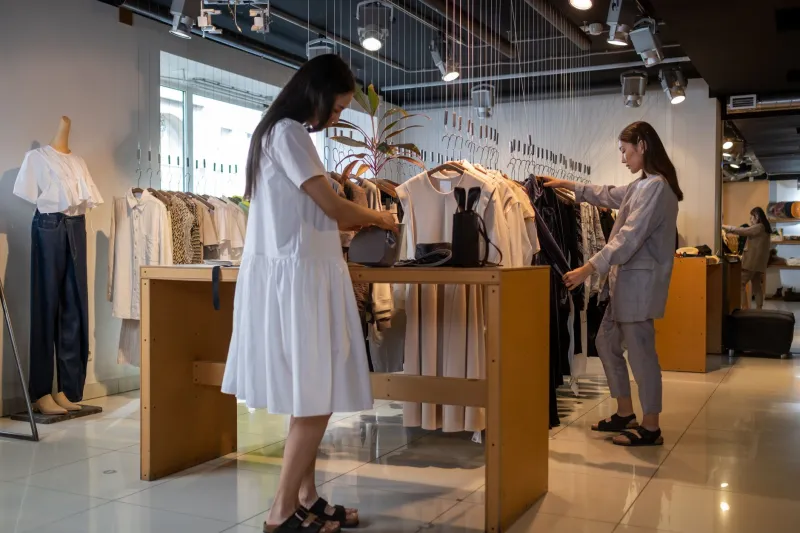
When a customer walks through the door of a retail store or hotel lobby, they form an impression within seconds. Lighting, scent, music, and merchandise arrangement all contribute to that first read — but beneath all of it, quite literally, is the floor. Flooring is one of the largest uninterrupted visual surfaces in any commercial interior, and environmental psychology research has begun to reveal just how meaningfully it shapes the way people feel, move, and spend.
For business owners and commercial designers, this is not an abstract concept. It is an actionable insight with measurable consequences for revenue.
The Subconscious Architecture of Space
Environmental psychology, the study of how physical surroundings affect human cognition and behavior, has long examined how design elements influence mood and decision-making. Flooring enters this conversation through several distinct channels: color perception, tactile feedback, acoustic properties, and spatial cues that guide movement through a space.
Researchers have found that warmer-toned flooring — amber wood tones, terracotta-influenced luxury vinyl, or warm-hued carpet — tends to evoke feelings of comfort and approachability. This can be particularly effective in hospitality environments where the goal is to encourage guests to linger, relax, and engage with the space on their own terms. Cooler tones, such as slate grays and clean whites, project professionalism and precision — associations that align well with high-end retail, technology showrooms, and financial services environments.
Texture adds another dimension. Smooth, reflective surfaces communicate modernity and efficiency. Matte or textured finishes suggest craftsmanship and tactile richness. In a boutique apparel environment, for example, a hand-scraped wood-look LVT can reinforce a brand identity built around authenticity and quality without a word being spoken.
Dwell Time and the Floor Beneath Your Feet
One of the most commercially significant findings in retail environmental research concerns dwell time — the amount of time a customer spends inside a store. Studies consistently demonstrate that customers who remain in a space longer tend to make more purchases and spend more per visit. Flooring contributes to dwell time in ways that are easy to overlook.
Comfort underfoot is a primary factor. Hard, unforgiving surfaces — particularly those with no acoustic dampening — can create fatigue and ambient noise that unconsciously signals to customers that it is time to move on. Carpet and cushioned-back luxury vinyl planks reduce foot fatigue and absorb sound, creating an environment that feels quieter, calmer, and more inviting. In grocery and big-box retail contexts, where customers may spend considerable time on their feet, anti-fatigue properties in flooring can meaningfully extend the shopping visit.
Zoning through flooring is another technique gaining traction among commercial designers. By transitioning between flooring materials — say, from polished concrete in a main aisle to warm wood-look planks in a product display area — retailers can visually and physically signal a shift in environment. This shift triggers a mild cognitive pause, encouraging customers to slow down and engage more deliberately with the merchandise in that zone.
Color, Pattern, and the Path to Purchase
The directional properties of flooring patterns are well-documented in retail design literature. Linear patterns oriented toward a focal point — a featured product display, a reception desk, or a brand centerpiece — naturally guide customer movement. Retailers that align their flooring direction with their merchandising strategy are, in effect, creating an invisible pathway to their highest-margin products.
Color contrast at thresholds and transition points can draw attention to specific zones within a store or venue. A shift from a neutral field to a richer, more saturated flooring tone can signal entry into a premium product section, priming the customer psychologically before they have even looked at a price tag. Conversely, consistent, low-contrast flooring throughout a space creates a sense of flow and continuity that encourages exploration rather than destination-focused movement.
For hospitality environments — hotels, restaurants, and event venues — the relationship between flooring and perceived value is particularly acute. Guests associate certain materials with quality and investment. Well-maintained hardwood or premium stone-look porcelain tile in a hotel lobby communicates that the property takes its physical environment seriously, which translates directly into perceptions of service quality and brand trustworthiness.
Acoustic Comfort as an Invisible Sales Tool
Noise levels in commercial spaces have a documented effect on customer satisfaction and purchase intent. Excessively loud environments — whether from foot traffic, ambient conversation, or mechanical systems — elevate stress responses and reduce the likelihood of extended engagement. Flooring plays a significant role in managing this acoustic environment.
Carpet remains the most effective flooring category for sound absorption, making it a practical choice for hotel corridors, conference areas, and certain retail segments. For spaces where the aesthetic demands of hard-surface flooring are non-negotiable, acoustic underlayments and cork-backed luxury vinyl products offer a meaningful compromise. Reducing impact noise and ambient reverberation does not merely make a space more pleasant — it creates the psychological conditions in which customers feel comfortable enough to slow down, ask questions, and ultimately convert.
Practical Guidance for Commercial Decision-Makers
For contractors advising retail or hospitality clients, and for business owners making flooring decisions themselves, the psychological dimension of surface selection deserves a seat at the planning table alongside durability, maintenance, and budget considerations.
Begin by clarifying the behavioral outcome the space is designed to produce. A fast-casual dining environment optimized for table turnover has different flooring needs than a fine-dining establishment built around a two-hour guest experience. A discount retailer and a luxury boutique may sell in the same square footage but require entirely different sensory environments to serve their respective customer bases.
Consider the full sensory profile — not just color and pattern, but texture, acoustic performance, and the physical comfort the surface provides underfoot. Engage with a flooring partner that can offer a range of commercial-grade products across these dimensions and can speak to real-world performance data from comparable installations.
Finally, treat flooring as a living component of the brand experience rather than a one-time infrastructure decision. As brand positioning evolves and customer expectations shift, the ability to reconfigure or refresh flooring elements — particularly with modular or plank-format products — allows commercial spaces to adapt without full-scale renovation.
The Strategic Surface
The floor has always been functional. What environmental psychology is now making clear is that it is also communicative — constantly transmitting signals about quality, comfort, and brand identity to every person who walks across it. For retailers and hospitality operators competing in an environment where customer experience is a primary differentiator, the decision of what lies underfoot is far too consequential to be treated as an afterthought.
At Tarkett USA, our commercial flooring portfolio is designed with precisely this understanding in mind — offering the aesthetic range, performance specifications, and material diversity that today's experience-driven commercial environments demand. Because the right floor does not just support your space. It works for it.