The Floor That Got You the Job: How Workplace Design Is Quietly Influencing Talent Decisions
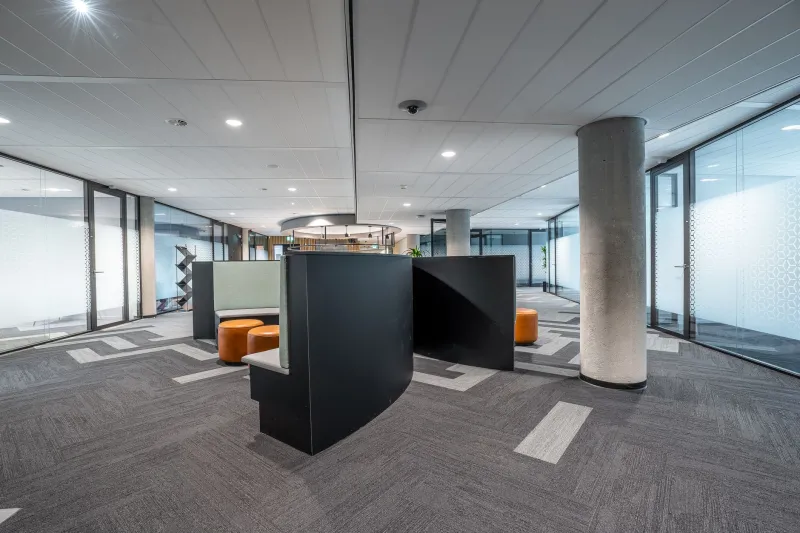
The modern job candidate arrives at an interview having already researched the company's Glassdoor rating, LinkedIn culture posts, and sustainability report. By the time they walk through the front door, they have formed a preliminary impression—and the physical environment they encounter in those first moments either confirms or complicates it. Increasingly, facility managers and HR leaders at forward-thinking organizations are recognizing that flooring, of all things, is doing meaningful work in that first impression.
This may sound like an overstatement. Flooring is, after all, the thing people walk on rather than consciously examine. But that is precisely the point. The way a floor feels, sounds, and looks registers subconsciously before a candidate has exchanged a word with a recruiter—and those subconscious signals accumulate into a perception of the company that is difficult to dislodge.
What Candidates Are Actually Reading in a Space
Environmental psychology has long established that people draw rapid, largely automatic inferences about organizations from their physical spaces. A lobby with worn, stained carpet signals neglect. A workspace with hard, echo-prone flooring in open-plan areas suggests that employee comfort was not a design priority. Conversely, a thoughtfully designed floor plan—where acoustic flooring reduces ambient noise, biophilic patterns create visual calm, and sustainable material choices are subtly communicated through visible certifications—signals an employer who has considered the human experience of the space.
For candidates in competitive fields—technology, healthcare administration, finance, engineering—this environmental reading happens quickly and carries real weight. When two offers are comparable in compensation and title, the felt quality of the physical workspace can tip the decision. This is not conjecture; it is a pattern that HR professionals in high-demand markets are observing with increasing frequency.
"We started paying attention to candidate feedback during exit interviews from our recruitment process," noted one facilities director at a mid-size financial services firm in the Midwest. "People were mentioning the office environment unprompted—both positively and negatively. That told us the space was communicating something, whether we intended it to or not."
Sustainability as a Values Signal
For a significant segment of the current workforce—particularly candidates in the 25-to-40 age range—an employer's environmental commitments are a meaningful factor in job selection. Sustainability claims on a website are expected and often viewed skeptically. Physical evidence of those commitments in the built environment is a different matter entirely.
Flooring products that carry FloorScore, Cradle to Cradle, or GREENGUARD certifications, or that incorporate recycled content and low-VOC adhesives, communicate genuine organizational commitment to environmental responsibility in a way that is difficult to fake. A candidate who notices a visible sustainability certification on a product spec sheet displayed in a reception area, or who is told during a space tour that the company's flooring was selected for its recycled content, receives a concrete data point that reinforces broader employer brand messaging.
This is not a niche concern. According to multiple workforce surveys conducted in the U.S. over the past several years, environmental responsibility consistently ranks among the top five factors younger professionals consider when evaluating employers. Flooring that reflects those values is a tangible, durable expression of organizational character.
Acoustic Design and the Wellness Signal
Open-plan office environments have faced sustained criticism for their impact on employee concentration and wellbeing. The acoustic consequences of hard flooring in open spaces—echoing footsteps, amplified conversation, a general sense of sonic exposure—are a significant contributor to that critique. Candidates who have worked in poorly designed open-plan environments recognize these conditions immediately and associate them with stress rather than productivity.
Acoustic flooring solutions that absorb impact sound, reduce ambient noise transmission, and create a sense of auditory privacy signal something important to a prospective employee: that the organization has thought carefully about the conditions under which people are expected to do their best work. This is a wellness signal, and it is one that resonates strongly in a post-pandemic labor market where work-life balance and mental health have moved from background considerations to primary concerns.
Companies that invest in acoustic flooring—particularly in collaborative zones and open-plan areas—are not simply managing noise. They are demonstrating, through a material choice, that employee wellbeing is a design priority rather than an afterthought.
The Coherence Factor
One of the more nuanced aspects of flooring's role in talent attraction is what might be called coherence: the degree to which the physical environment is consistent with the employer's stated values and culture. A company that markets itself as innovative and employee-centric but operates out of a dated, poorly maintained space creates a dissonance that candidates notice. Conversely, a workspace where the design choices—including flooring—visibly reflect the organization's values creates a coherent, credible narrative.
This does not require a renovation budget that only Fortune 500 companies can afford. Targeted investments in high-visibility areas—lobbies, interview rooms, collaborative spaces—can substantially shift the impression a space makes without requiring a full facility overhaul. Modular flooring systems, for example, allow organizations to update specific zones efficiently and cost-effectively, keeping the environment current without the disruption and expense of comprehensive replacement.
A Strategic Lens on Specification
For facility managers and HR leaders who are beginning to think about workplace design as a talent strategy rather than a maintenance function, the implication is straightforward: flooring decisions belong in the conversation about employer brand, not just the conversation about lifecycle costs.
That does not mean prioritizing aesthetics over performance. It means recognizing that the two are not in opposition. A floor that is durable, acoustically effective, sustainably sourced, and visually aligned with organizational identity serves the business on multiple dimensions simultaneously—including the dimension of talent attraction that is often left out of the specification brief entirely.
At Tarkett USA, we work with organizations that are beginning to understand the full scope of what their floors communicate. The product choices are technical. The impact, however, is unmistakably human.