What Your Floor Is Saying: The Strategic Role of Flooring Design in Brand Communication
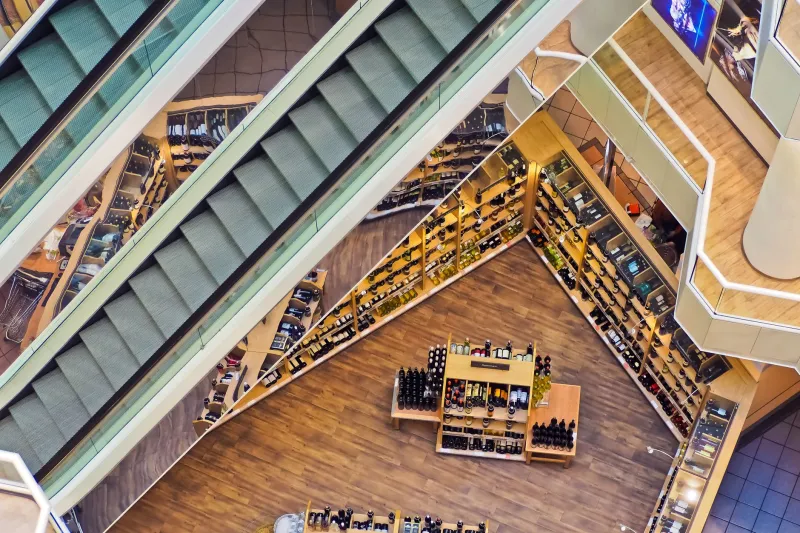
Brand identity in the built environment is rarely the product of a single design decision. It accumulates — through material choices, spatial proportions, lighting quality, and the sensory experience of moving through a space. Among all of these elements, flooring occupies a position of unusual influence. It is the first surface a visitor's eye registers upon entry. It is the surface that connects every zone of a space into a coherent whole. And it is, in most commercial environments, the largest single design surface in the room.
Despite this, flooring is frequently treated as an infrastructure decision rather than a brand decision. Specifications are driven by durability requirements, maintenance considerations, and budget constraints — all legitimate factors — while the communicative dimension of the material is left largely to chance.
This is a significant missed opportunity. The organizations that understand flooring as a brand asset — not merely a building component — are using it to do meaningful strategic work: reinforcing positioning, signaling values, and shaping the way customers and employees feel about the space before a single word is spoken.
The Psychology of Surface: Why Floors Register Emotionally
Human beings process environments through multiple sensory channels simultaneously, but visual and tactile impressions from the floor register with particular speed and emotional weight. Research in environmental psychology consistently demonstrates that surface materials contribute substantially to how a space is perceived — whether it reads as welcoming or austere, trustworthy or transient, aspirational or utilitarian.
These responses are not arbitrary. They are grounded in learned cultural associations that flooring materials carry over time. Polished marble signals permanence and prestige — its association with classical architecture and institutional grandeur is centuries old. Wide-plank hardwood communicates craftsmanship and warmth, drawing on vernacular American associations with artisanal quality and domestic comfort. Exposed concrete implies transparency and industrial authenticity — values that have become central to the brand language of technology companies, creative agencies, and direct-to-consumer retail brands.
These associations operate largely below the threshold of conscious analysis. A customer walking into a financial services office does not think: "This marble floor signals institutional stability." But they feel it. And that feeling shapes their confidence in the brand before any conversation begins.
Material Archetypes and What They Communicate
Understanding the communicative vocabulary of flooring materials is the first step toward using that vocabulary intentionally.
Natural Stone and Premium Marble-Look Surfaces These materials signal investment, permanence, and prestige. They are appropriate for luxury retail, high-end hospitality, financial services, and premium healthcare environments where the organization's brand positioning depends on communicating quality at every touchpoint. Modern high-definition porcelain and luxury vinyl products that accurately replicate natural stone offer the visual vocabulary of premium materials with practical advantages in maintenance and durability — making the brand statement accessible across a broader range of budgets.
Hardwood and Wood-Look Flooring Wood surfaces carry a warmth and approachability that few other materials match. In workplace environments, wood-look flooring communicates a human-centered culture — one that values comfort, creativity, and connection over institutional formality. For consumer-facing brands in food and beverage, lifestyle retail, and professional services, wood surfaces create an environment that feels curated rather than corporate. The choice between solid hardwood, engineered hardwood, and high-quality wood-look LVP involves practical tradeoffs, but the communicative effect can be achieved across all three categories when the visual quality is authentic.
Exposed and Polished Concrete Concrete has undergone a remarkable cultural rehabilitation over the past two decades. Once associated primarily with industrial and utilitarian spaces, polished and sealed concrete now functions as a premium material choice in contexts ranging from technology campuses to high-end retail. The message it sends is one of transparency, confidence, and a certain deliberate restraint — the brand that chooses concrete is saying, in effect, that it does not need ornamentation to make its case. This positioning resonates strongly with younger, design-literate consumer demographics and with organizations whose brand identity centers on innovation or environmental consciousness.
Patterned and Graphic Flooring Bold pattern — whether through tile design, carpet tile layout, or printed resilient flooring — communicates energy, creativity, and distinctiveness. It is a choice that says the organization is not interested in blending into the background. Graphic flooring is particularly effective in educational environments, creative agency offices, children's-focused retail, and entertainment venues where the space itself is part of the brand experience. The risk of pattern is the risk of all bold choices: it dates more quickly than neutral material selections and requires a clear strategic rationale to avoid reading as arbitrary.
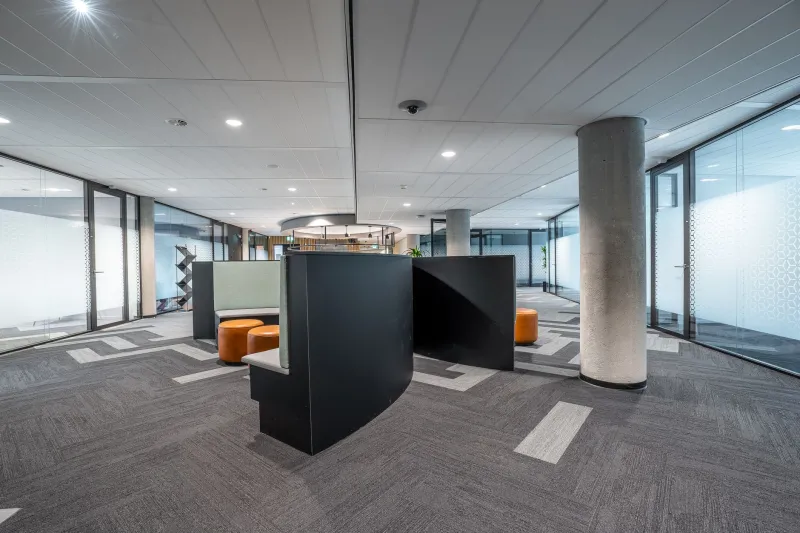
Neutral Resilient Flooring and Commercial Carpet Neutral does not mean uncommunicative. Well-executed neutral flooring — whether a refined commercial carpet in a carefully considered colorway or a clean, consistent resilient tile system — communicates professionalism, reliability, and respect for the visitor's attention. In healthcare environments, for example, calm neutral flooring contributes meaningfully to a sense of safety and order. In corporate offices, it creates a visual foundation that allows other brand elements — furniture, art, signage — to carry the expressive weight without competition from the floor.
Texture, Finish, and the Tactile Dimension of Brand
The communicative work of flooring is not limited to material type. Texture and finish add a layer of meaning that many organizations overlook entirely.
High-gloss finishes amplify light and create a sense of expansiveness — they are associated with luxury, cleanliness, and modernity. They are also less forgiving of scratches and everyday wear, which means the brand statement they make requires a maintenance commitment to sustain. Matte and satin finishes communicate a more understated sophistication — they are currently dominant in premium residential and commercial design precisely because they read as confident rather than performative.
Textured surfaces add a tactile dimension that can reinforce specific brand narratives. A deeply embossed wood-look floor suggests authenticity and craft. A smooth, monolithic surface suggests precision and control. A subtly varied stone-look texture suggests natural complexity and depth. These are nuanced signals, but in aggregate, they contribute to the overall emotional register of a space.
Aligning Floor to Brand: A Decision Framework
For design teams, facility managers, and brand strategists approaching a flooring specification, the following questions provide a useful framework for ensuring that material selection serves the organization's communicative goals:
-
What three adjectives should a first-time visitor associate with this space? Map candidate flooring materials against those adjectives and test for alignment.
-
Who is the primary audience for this space? Consumer demographics, professional contexts, and cultural backgrounds all shape how flooring materials are perceived. A material that signals sophistication to one audience may read as cold or inaccessible to another.
-
What does the brand's competitive positioning require? A challenger brand in a category dominated by formal, traditional competitors may find significant differentiation value in a more unconventional flooring choice. An established premium brand may need the floor to reinforce — not disrupt — existing expectations.
-
How will this floor age? Brand signals delivered on day one of an installation should remain legible five and ten years later. Materials that show wear quickly, or that date stylistically, undermine the brand message over time.
The Floor as a Strategic Asset
The organizations that are most intentional about their built environments understand something that purely functional specifications miss: every surface is a communication. The floor beneath your customers' feet is not neutral space. It is an opportunity — to reinforce positioning, build trust, signal values, and create an experience that outlasts any single transaction.
Treating flooring as a brand decision rather than a procurement decision does not require abandoning practical considerations. Durability, maintenance, and budget remain legitimate constraints. But within those constraints, the design choices that remain are rich with communicative potential.
The floor is speaking. The question is whether the organization has decided what it wants it to say.